


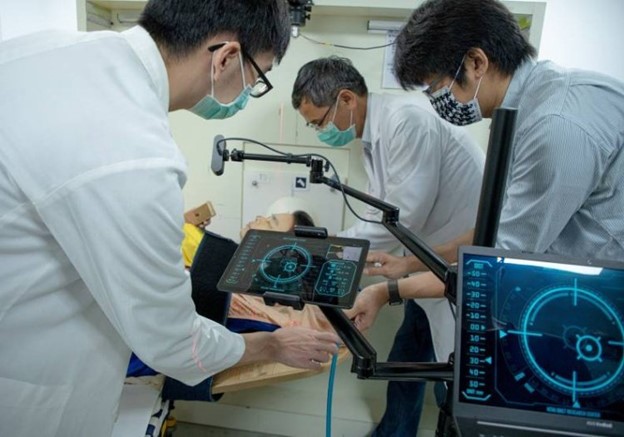
(We Chinese in America Media Editor Tang Zhao, February 8, 2022) BNCT therapy brings hope of rebirth to patients with head and neck cancer. The picture is a demonstration treatment process of BNCT Center of Qingda University. (Photo from United News Network).
Taiwan has an emerging medical technology that is arrogant in the world. This low-key "light of the world" brings the last ray of hope to patients with head and neck cancer and brain tumor. Not only is it certified by international organizations, but Taiwan is the only country in the world that can engage in boron neutron capture therapy (BNCT) and the only country in the world that uses this method to cure malignant brain tumor patients.
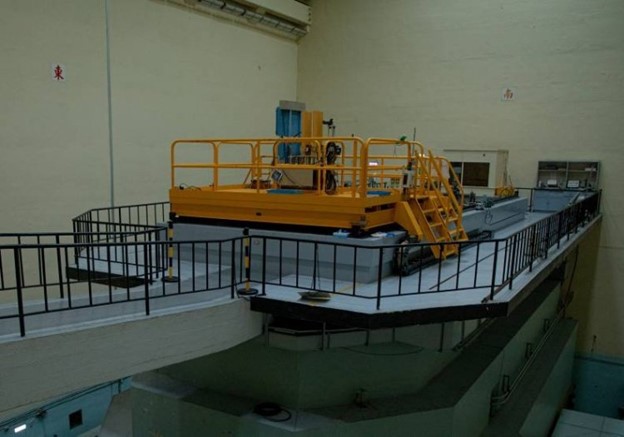
Photo/Qingda Atomic Furnace plays a key role in BNCT treatment. (Photo from United News Network)
The right time, the right place, the people, and the people have contributed to the development of BNCT in Taiwan
In the past three years, Taiwan's BNCT has developed by leaps and bounds, keeping pace with Japan. Every day, Taipei Rongzong International Treatment Center receives dozens of phone calls and emails for help, including Japan, Australia, Brazil, the Netherlands, Spain, Singapore, and other places. It also received two Russian patients a month ago. letter.
At 7:00 am on December 24, 2021, two ambulances from Beirong honked their horns all the way into the campus of Tsinghua University and went straight to the BNCT center of the pool reactor (commonly known as the atomic furnace). On this day, Chen Yiwei, the chief physician of the Radiation Therapy Department of Beirong Oncology Department, was about to perform BNCT treatment for two Taiwanese patients.
Why do patients have to go to Qingda Atomic Furnace for treatment?
Boron neutron capture therapy, as the name suggests, is to irradiate tumors that have absorbed boron-containing drugs with neutrons to induce boron splitting reactions in the drugs to kill cancer cells without affecting healthy tissues. Therefore, the two keys to treatment are an effective source of neutrons and the targeting of boron-containing drugs.
Zhou Fengying, a research and development consultant at the BNCT Center of Tsingtao University, said, "Taiwan's BNCT has achieved today's results, which is caused by the right time, the right place, and the people.".
Qingda Atomic Furnace Converted to Medical Use, BNCT Treatment Is Dawning
In 1992, the anti-nuclear noise gradually increased, and the first day when BNCT was created was when the head of the reactor group at Qingda University decided to convert the atomic furnace into medical use, integrate the resources of the Department of Nuclear Engineering and the original center, and set up BNCT research team, and evaluates the conversion of the only research atomic furnace in Taiwan into a BNCT treatment facility.
Good things have been going through a lot of hardships, until Kaizhizhong, who also served as the director of the original science center in 2000, finally won a budget of 70 million from the National Science and Technology Association (now the Ministry of Science and Technology)
Liu Hongming, who is currently the first-class nuclear engineer of the Yuanke Center and deputy director of the BNCT Center, stood on the atomic furnace viewing platform, pointed down to a light blue facility, and said that this is the newly added neutron irradiation room, which is drawn from the atomic furnace. The sub-irradiation patient, next to the roof with the BNCT pattern printed on it, is the preparation area and rest room for the patient to spray medicine.
"I built the facility, but I never thought that the atomic furnace could one day enter the clinic and treat patients," he even asked back, "Just think, what is the patient's reaction when they hear the atomic furnace? The atomic furnace is not a medical device. To treat, or to be treated as an experiment?”
What is BNCT?
Boron Neutron Capture Therapy (BNCT): Inject a boron-containing drug into the human body. After being ingested by cancer cells and irradiated with neutrons, the boron-containing drug will fission to produce two types of radiation particles with high biological destructive ability, which can accurately kill cancer cells Cells can achieve the purpose of treatment, and the damage to healthy cells is extremely slight and can be recovered. In the past three years, Taiwan has engaged in 17 overseas emergency medical treatments, and the treatment results have leapt to the international stage.
After 30 years, Taiwan's BNCT has developed a great leap forward
On January 30, 2019, Australian Prime Minister Kevin Rudd asks for help in treating Australians through diplomatic channels. Taiwan opened the first BNCT emergency medical treatment for foreign patients. A year later, Li Min, Dean of the Former Academy of Sciences of Qing University, and Ye Zongkuang, Director of the Former Academy of Sciences, actively raised funds and planned to transform the atomic furnace into a qualified medical device to benefit more terminal cancer patients.
(Source: United News Network)
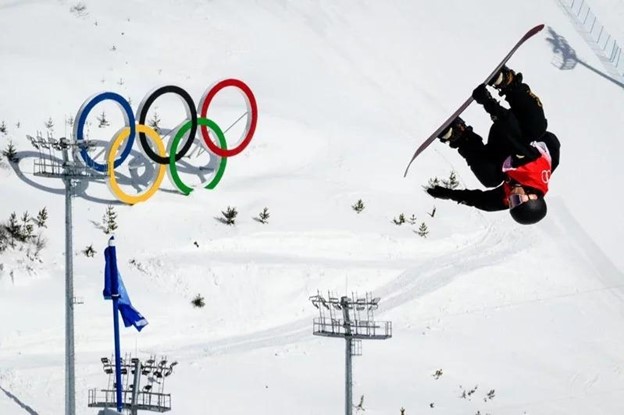
(We Chinese in America Media Editor Tang Zhao, February 7, 2022) How does a water-starved Beijing cope with the water needed for the largest snow-making campaign in Olympic history? Xinhua
It doesn't snow every day in winter in Beijing, but the Winter Olympics are held here, which has led to the largest snowmaking operation in Olympic history. "The New York Times" specially wrote an article to report, where did the water-deficient northern China find so much "water" to make snow?
Beijing has always faced drought problems in winter, and sometimes it must rely on the "South-to-North Water Diversion" to supply enough water to the north. This time, Beijing is in big trouble for the Winter Olympics. Not only is there a shortage of water, but also "lack of snow". The raw material is water, so the problem goes back to lack of water.
Artificial snow has become an integral part of modern winter sports, even in snowy places such as Norway, Switzerland, and Colorado. "There are no winter sports right now without artificial snow," said Michael Mayr, the regional manager for Asia. The Winter Olympics will use artificial snow almost entirely for the first time, which requires large-scale snowmaking and water production. Resource management operations.
How much water is needed to prepare for a Winter Olympics? According to the data of Tianbing Group, it takes about 1 million cubic meters, which must be enough to fill 400 Olympic-sized swimming pools. This is only the amount needed in the initial stage of the Olympics. As the competition progresses, more snow may be required. Arguably more water.
Back to the issue of water shortage, the Chinese government built pumping stations to draw water from reservoirs several kilometers away. According to Chinese state media reports, Beijing diverted water from the Baihebao Reservoir into the Guishui River. The Guishui River is dry most of the time in winter, but it flows near the Olympic venues and plays an important role in this Winter Olympics. The Chinese government has thus allowed the river, which was dry in winter, to be refilled with water.
Jessie Diggins, who won the gold medal in cross-country skiing at the 2018 PyeongChang Winter Olympics, said: "This isn't the first time we've raced on artificial snow, and unfortunately, it doesn't seem like it will be the last." Talking about the difference between natural snow and artificial snow: "It [natural snow] is harder, colder, and it changes with the weather. I wouldn't say it's dangerous, but it makes the track trickier, because you have to figure out how to get through the corners."
However, when temperatures are extremely low, alpine skiers may prefer artificial snow, as modern snowmaking technology can create "wet snow" that eventually freezes into the ice that the riders prefer. "It's denser, it doesn't really form snowflakes, it's fluffier after trimming," said Travis Ganong, a U.S. ski-racer. Love the slippery and hard surfaces like this.”
(Source: Compiled from Online Information)
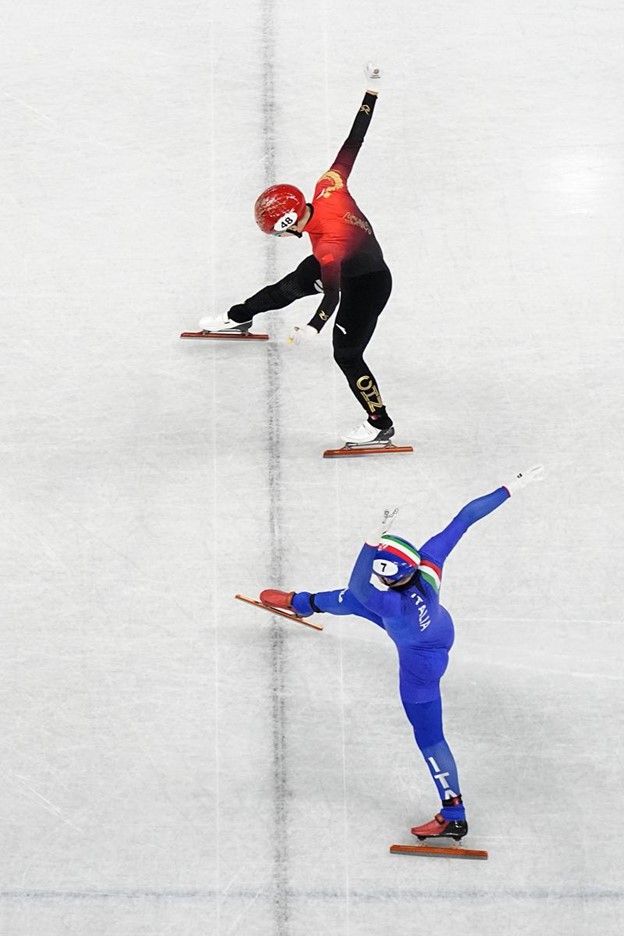
(We Chinese in America Media Editor Tang Zhao, February 6, 2022) In the Beijing Winter Olympics short track speed skating mixed team 2000m relay final, the Chinese team competed fiercely with the Italian team. Wu Dajing (pictured above), the last team of the Chinese team, narrowly defeated the Italian team in the final sprint by one foot, won China's first gold medal at the Winter Olympics. (Photo from Associated Press)
China's first gold medal in the Beijing Winter Olympics was released on the 5th, Beijing time. The Chinese team surpassed the Italian team by a distance of one foot in the short track speed skating event, narrowly winning the gold; on the other hand, Norwegian cross-country skier Dre Therese Johaug wins double pursuit event to win first gold medal at Beijing Winter Olympics Win a silver medal in a skill event.
The Beijing Winter Olympics short track speed skating 2000-meter mixed relay quarter is the first event set up after the PyeongChang Winter Olympics. Chinese team members Qu Chunyu, Fan Kexin, Ren Ziwei and Wu Dajing set a record with a score of 2:37.535. Keep the first gold medal in this project in China.
In the final, the Chinese team, Hungary, Canada, and the Italian team competed for the championship glory; in the last five laps of the game, the Canadian team and the Hungarian team collided, and only the Chinese team and the Italian team continued to sprint.
Although Pietro Sighel of Italy sprinted hard in the last lap, Wu Dajing finally won the championship with one foot, and the team finally won the championship with 2:37.348.
Beijing resident Cheng Hongwei said: "It's very exciting, exciting and emotional, I watched the Chinese team step by step to the finish line, the glory belongs to China”
(Source: Compiled from Online Information)
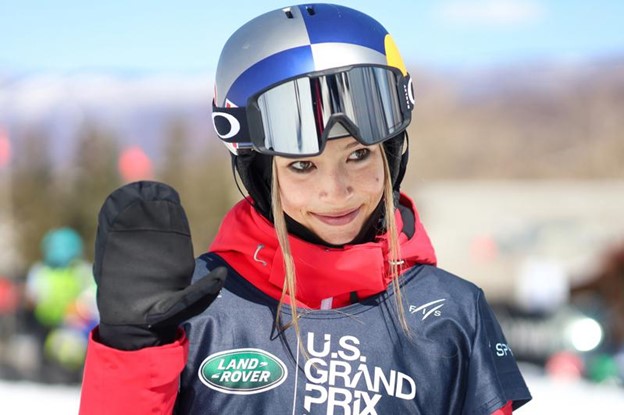
(We Chinese in America Media Editor Tang Zhao, February 7, 2022) The American Chinese mixed-race female freestyle skier Gu Ailing, who represents China, has received much publicity and attention from Chinese fans and official media, but has once again raised embarrassing discussions about her nationality. (Associated Press)
The American Chinese mixed-race female freestyle skier Gu Ailing, who was born in the United States and now represents China, participated in the Winter Olympics for the first time in Beijing, which attracted much publicity and attention from Chinese fans and official media, but also raised embarrassing discussions about her nationality.
Reuters reported that 18-year-old Eileen Gu is not only a fashion model, but also about to enter the prestigious Stanford University (Stanford University). After she officially joined the Chinese team in 2019, she was quickly seen as the best-known Chinese Winter Olympic athlete.
After Gu Ailing arrived in Beijing at the end of January, Chinese media reports and her active use of social media have further increased her popularity. The headline of China's official tabloid Global Times read on the 3rd: "Freestyle skiing star Gu Ailing represents true sportsmanship and is a super idol for young Chinese."
Gu Ailing, whose mother is from Beijing, represented China for the first time at the age of 15 and is now regarded as an Olympic gold favorite. In the Beijing Winter Olympics freestyle skiing, she will participate in three events: the big platform, the slope obstacle, and the U-shaped pool. The first competition is the big platform qualification on the 7th.
Topics related to Gu Ailing have been discussed on Chinese social media in recent weeks, from when she was in the front row when the Chinese team entered the field at the opening ceremony, to the choice of dumplings for her first meal after arriving in Beijing. The number of followers of Gu Ailing's Weibo account surged by hundreds of thousands within a month, reaching 1.7 million.
Chinese media have focused on Gu Ailing's fluent Chinese, her mixed-race face, her proud embrace of Chinese culture and her academic excellence as reasons for her popularity with the Chinese public.
However, the topic that Gu Ailing raised was also accompanied by controversy, especially when she transferred to the Chinese team after playing for the United States, the country where she was born and raised for many years.
Some Chinese netizens questioned whether she played for the Chinese team in the Beijing Winter Olympics and has given up her American citizenship. China does not allow dual citizenship; the local media has avoided discussing the topic.
The hashtag "Gu Ailing's Nationality" surged on Weibo from the 2nd to the 4th, accumulating hundreds of thousands of views. Netizen Tomson wrote: "Most British and Chinese people keep the passports of the People's Republic of China, but they are very careful not to be caught, so as not to have their (Chinese) passports cut... Compared with the dignity of the law and the gold medal of the Winter Olympics, which is more precious?"
There are also many fans of Gu Ailing who argue for her. Netizen mynameisliuxiaohun said: "Who cares if she has dual nationality! In any case, she is representing China and she is carrying the Chinese flag! The glory she has won belongs to China, will it be another country? Isn't that bad? "
Gu's sports agent, Tom Yaps, told Reuters that Gu could not be interviewed because the competition schedule was too full, and he did not respond to written questions.
(Source: Compiled from Online Information)
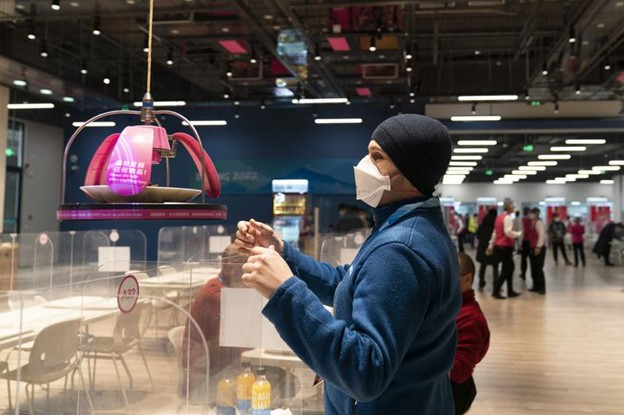
(We Chinese in America Media Editor Tang Zhao, February 6, 2022) In the canteen of the Media Center of the Beijing Winter Olympics, Matthew Potvin, a technician from Canada, took his lunch order from a robot plate that "falls from the sky". (Photo from Associated Press)
The Beijing Winter Olympics opened on the 4th, and the venues and media centers of the Winter Olympics have successively revealed their true colors. Recently, journalists from all over the world have published articles on the Internet, lamenting the large number of robots in the media center and their dazzling skills. From cooking and bartending, to cleaning and delivery, all kinds of needs can be met.
(Video production: He Zhuoxian, WorldNet YouTube)
(Source: Compiled from Online Information)