





【《We Chinese in America》Media Editor Tang Zhao, November 29, 2022】As an ongoing effort to enhance our valuable service to We Chinese in America website readers, We Chinese in America website posts English and Chinese versions of “IRS News Release” , “IRS Fact Sheets”, and “tax tips” directly received from IRS Media Relations Office in Washington, D.C.. We are pleased to take on this important role partnering with IRS to better inform the public.
IRS, Security Summit partners begin National Tax Security Awareness Week; urge people to watch out for holiday scams and protect personal information as tax season nears
IR-2022-204, Nov. 28, 2022
On Cyber Monday, the Internal Revenue Service and the Security Summit partners kicked-off the 7th National Tax Security Awareness Week with information for taxpayers and tax professionals on how to avoid scams and protect sensitive personal information.
With the holiday season now in full swing, the period presents a prime opportunity for identity thieves to try stealing personal financial information, which also could be used to potentially file fraudulent tax returns. People can face risks if they’re shopping online and using publicly accessible Wi-Fi. And the Summit reminds people that fictitious text scams with “smishing” schemes continue during this period.
“With holiday shopping starting and the 2023 tax season quickly approaching, many people will be using laptops and personal devices to share sensitive financial information,” said IRS Acting Commissioner Doug O’Donnell. “In the months ahead, these same devices will be used to complete millions of tax returns by both taxpayers and tax professionals, making the holiday season the perfect time to take steps to protect your valuable information and watch out for scams.”
Formed in 2015, the Security Summit partnership between the IRS, state tax administrators and the tax software and tax professional community have worked together to improve defenses and protect people from tax-related identity theft. As part of that effort, the Summit partners worked to raise taxpayer and tax professional awareness about security issues – not only protecting people from the risk of identity theft but helping protect the nation’s tax system from refund-related fraud.
The Summit partners urged people to take extra care while shopping online or viewing emails and texts, especially during the holiday season when criminals are very active. The Security Summit reminds everyone to stay safe while holiday shopping with the following considerations:
- Shop at sites where the web address begins with "https" – the "s" is for secure communications and look for the “padlock” icon in the browser window.
- Don't shop on unsecured public Wi-Fi in places like a mall.
- Keep security software for computers, tablets and mobile phones updated.
- Protect the devices of family members, including young children, older adults as well as less technologically savvy users.
- Make sure anti-virus software for computers has a feature to stop malware, and that there is a firewall enabled that can prevent intrusions.
- Use strong and unique passwords for online accounts.
- Use multi-factor authentication whenever possible. It helps prevent thieves from easily hacking accounts.
The IRS also reminds people about advice from the Federal Trade Commission to never buy anything from online sellers that accept payment only by gift cards, money transfers through companies like Western Union or MoneyGram or cryptocurrency. Payments you make that way are nearly impossible to trace and reverse. Scammers often tell people to use those payment methods so they can get money quickly.
Additionally, the IRS warned taxpayers of a recent increase in IRS-themed texting scams aimed at stealing personal and financial information. During 2022, the IRS identified and reported thousands of fraudulent domains tied to multiple MMS/SMS/text scams (known as smishing) targeting taxpayers.
Smishing campaigns target mobile phone users, and the scam messages often look like they're coming from the IRS, offering lures like fake COVID relief, tax credits or help setting up an IRS online account. Recipients of these IRS-related scams can report them to 该Email地址已收到反垃圾邮件插件保护。要显示它您需要在浏览器中启用JavaScript。.
Stolen data can be used to file fraudulent tax returns that make it more difficult for the IRS and the states to detect because the fraudulent returns use real financial information. Other data thieves sell the basic tax preparer or taxpayer information on the web so other fraudsters can try filing fraudulent tax returns.
Given the rise of texting scams, taxpayers can check out security recommendations for their specific mobile phone by reviewing the Federal Communications Commission's Smartphone Security Checker. Since phones are used for shopping and even for doing taxes, remember to make sure phones and tablets are just as secure as computers.
Additional tips for tax professionals, business and people working from home
Earlier this year the Protect Your Clients; Protect Yourself campaign encouraged tax professionals to focus on fundamentals and to watch out for emerging vulnerabilities being seen for those practitioners using cloud-based services for their practice. Scammers either trick or hack their way into tax professionals' computer systems to access client data. Even when tax pros think they have client data stored in a secure cloud, lack of strong authentication can make this information vulnerable.
Additional considerations for businesses and those working from home include:
- Use separate personal and business computers, mobile devices and email accounts.
- Do not send sensitive business information to personal email devices.
- Do not conduct business, including online business banking, on a personal computer or device.
- Do not engage in web surfing, gaming or video downloading on business computers or devices.
- Do not share USB drives or external hard drives between personal and business computers or devices.
- Never connect an unknown/untrusted piece of hardware into the system or network.
- Change passwords often. Every three months is recommended. Consider using a password management application to store passwords. Passwords to devices and applications that contain business information should not be reused.
This is the first in a series of press releases highlighting the Summit partner’s National Tax Security Awareness Week from Nov. 28 through Dec. 2, which will feature a week-long series of educational materials to help protect individuals, businesses and tax professionals from identity theft. The effort includes a Nov. 29 webinar titled Deeper Dive Into Emerging Cyber Crimes and Crypto Tax Compliance, special informational graphics and a social media effort on Twitter, Facebook and YouTube. Follow @IRSTaxSecurity, @IRSnews and #TaxSecurity on Twitter for the latest information.
Internal Resource Service
Media Relation Office
Washington, D. C
Media Contact: 202 317 4000
Public Contact: 800 829 1040

【《We Chinese in America》Media Editor Tang Zhao, Vovember 28, 2022】Black Friday sales raked in a record $9.12 billion from online shoppers this year despite concerns of inflation and higher prices, according to estimates.
The $9.12 billion figure is up from $8.92 billion in 2021 and $9.03 billion the previous year, according to Adobe Analytics. Inflation accounts for some of the increase this year, with people paying more to buy less.
Online sales for electronics spiked 221% on Friday compared to an average day in October 2022, with top sellers including Apple MacBooks and watches, Adobe says.
Other popular items included drones, Xbox Series X, and games such as FIFA 23 and Pokémon Scarlet and Violet.
Adobe expects discounts to remain strong throughout the weekend, predicting shoppers will spend another $4.52 billion on Saturday and $4.99 billion on Sunday. Cyber Monday is expected to top Black Friday online sales, with totals reaching $11.2 billion.
Despite the record online spending this Black Friday, consumers' concerns about the economy are at the highest level since the Great Recession in 2008-2009. More than 60% of Americans said the state of the economy was impacting their holiday spending plans, according to the NRF.
To alleviate immediate large spending, Americans are turning to buy now, pay later orders, which allow shoppers to pay through interest-free installments. Buy now, pay later orders spiked 78% this week compared to the previous week, according to Adobe. Revenue from these orders is also up 81% in the same period.
Adobe says it reaches its estimates by analyzing over 1 trillion visits to U.S. retail sites in 18 product categories including smart home items, audio equipment and toys.
(Source: NPR)
This website has a free subscription function, please enter your email address and name (any nickname) in the upper right corner of the page. After subscribing, you can receive timely updates of the website. I hope that new and old readers will actively subscribe, so that we have the opportunity to provide you with better services
Please click: Home (wechineseus.com) for more news and content on this website
Follow The Chinese Media's Twitter account: https://twitter.com/wechineseinus
Follow The Chinese Media's Facebook account: https://www.facebook.com/wechineseinamerica/
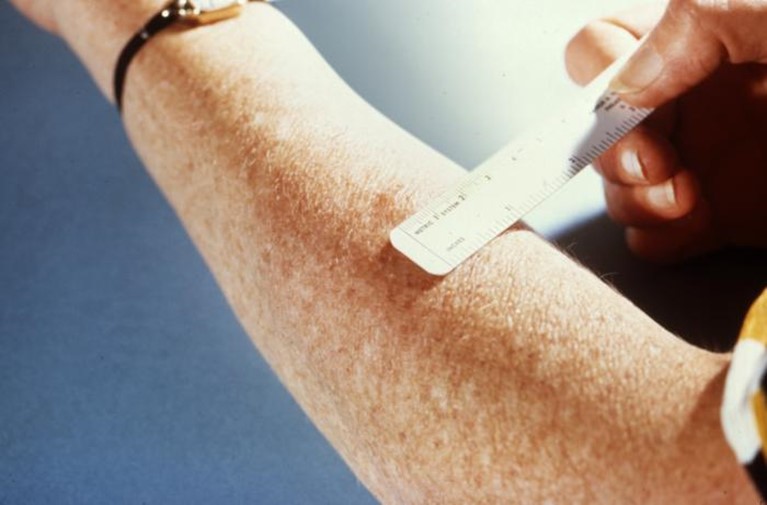
【《We Chinese in America》Media Editor Tang Zhao, November 26, 2022】Per Students and staff at California State University San Marcos (CSUSM) may have been exposed to tuberculosis (TB) during this Fall Semester 2022 session, the San Diego County Health and Human Services Agency (HHSA) announced today.(Photo Courtesy: County of San Diego Communications Office)
HHSA Public Health Services and CSUSM officials have worked in close collaboration to identify and notify those with a higher risk of exposure to tuberculosis and will be providing no-cost testing to individuals at increased risk for infection. The period of exposure was from August 30, 2022 to November 8, 2022.
Tuberculosis is an airborne disease that is transmitted from person to person through inhalation of the bacteria from the air, which are spread when someone sick with TB coughs, speaks, sings, or breathes. people with frequent and prolonged indoor exposure to a person who is sick with TB should get tested.
“Symptoms of active TB include persistent cough, fever, night sweats and unexplained weight loss,” said Wilma J. Wooten, M.D., M.P.H., County public health officer. “Most people who become infected after exposure to tuberculosis do not get sick right away. Some who become infected with tuberculosis will become ill at some point in the future, sometimes even years later. Blood tests and skin tests are effective to determine whether someone has been infected. All those notified of a high risk of exposure are encouraged to receive no-cost testing.”
Effective treatments are available to treat people who are sick from active TB. It is especially important for individuals with symptoms of active TB and those who are immune-compromised to see their medical provider to rule-out active tuberculosis, and to discuss treatment.
People who test positive for TB but who don’t have symptoms of active TB should get a chest x-ray and talk to a medical provider, as they most likely have “latent TB infection” or LTBI. People with a latent TB infection are infected with the TB germs, but the infection is essentially dormant or sleeping. Taking medicines for latent TB infection, or LBTI, can prevent people from getting active TB in the future.
Individuals who would like more information on this potential exposure should contact:
- Cal State San Marcos: email 该Email地址已收到反垃圾邮件插件保护。要显示它您需要在浏览器中启用JavaScript。
- County TB Control Program at (619) 692-8621
The number of annual TB cases in San Diego County has decreased since the early 1990s and has stabilized in recent years. There were 192 cases reported in 2020 and 201 cases 2021.
As of the end of October, a total of 150 cases have been reported this year. An estimated 175,000 people in San Diego County have latent TB infection and are at risk for developing active TB without preventive treatment.
(Source: County of San Diego Communications Office)
This website has a free subscription function, please enter your email address and name (any nickname) in the upper right corner of the page. After subscribing, you can receive timely updates of the website. I hope that new and old readers will actively subscribe, so that we have the opportunity to provide you with better services
Please click: Home (wechineseus.com) for more news and content on this website
Follow The Chinese Media's Twitter account: https://twitter.com/wechineseinus
Follow The Chinese Media's Facebook account: https://www.facebook.com/wechineseinamerica/


【《We Chinese in America》Media Editor Tang Zhao, November 27, 2022】As an ongoing effort to enhance our valuable service to We Chinese in America website readers, We Chinese in America website posts English and Chinese versions of “IRS News Release” , “IRS Fact Sheets”, and “tax tips” directly received from IRS Media Relations Office in Washington, D.C.. We are pleased to take on this important role partnering with IRS to better inform the public.
These security guidelines can help keep personal info safe online
Taking online security seriously can help people keep their information safe and out of the hands of identity thieves and scammers. It only takes a few simple steps to avoid common security pitfalls. By following these tips, consumers and taxpayers can reduce the risk of losing their identity, money or accounts to criminals.
Always protect personal data
Personal information can include things like birthdays, addresses, age and Social Security numbers. People should only provide their data when necessary and after verifying the identity of the requestor. If someone requests personal or financial information, taxpayers should verify their request separately. For government employees, this could include contacting the agency or visiting the agency's website.
Only shop at reputable retailers
Everyone should shop at reputable online retailers. People should only shop on secure sites avoid any websites with invalid certificates. The letters “https” do not mean that the website is legitimate since criminals can simply purchase valid SSL certificates and attach them to fraudulent websites.
Use security software
People should make sure their security software, such as anti-virus and firewalls are always turned on and automatically updated. They should regularly backup and encrypt sensitive files stored on computers. Sensitive files include things like tax records, school transcripts and college applications. They should also be sure all family members have comprehensive anti-virus protection for their devices, particularly on shared devices.
Chose strong passwords and two-factor authentication
They should use strong, unique passwords for each account and enable two-factor authentication for online accounts where possible. People should never share their password with anyone.
Know the risk of public Wi-Fi
Connection to public Wi-Fi is convenient and often free, but it may not be safe. Criminals can easily steal personal information from these networks. People should always use a virtual private network when connecting to public Wi-Fi.
Learn to recognize and avoid scams
Everyone should be aware of common scams. Criminals use phishing emails, threatening phone calls and texts to pose as IRS employees or other legitimate government or law enforcement agencies. People should remember to never click on links or download attachments from unknown or suspicious emails.
Be aware of compromised accounts
Once a criminal has hacked an email or social media account, they may try to scam the victim’s contacts by posing as the victim. Everyone should be suspicious of unusual, out-of-character requests or messages, even when the account belongs to a friend, colleague or family member.
Internal Resource Service
Media Relation Office
Washington, D. C
Media Contact: 202 317 4000
Public Contact: 800 829 1040
This website has a free subscription function, please enter your email address and name (any nickname) in the upper right corner of the page. After subscribing, you can receive timely updates of the website. I hope that new and old readers will actively subscribe, so that we have the opportunity to provide you with better services
Please click: Home (wechineseus.com) for more news and content on this website
Follow The Chinese Media's Twitter account: https://twitter.com/wechineseinus
Follow The Chinese Media's Facebook account: https://www.facebook.com/wechineseinamerica/
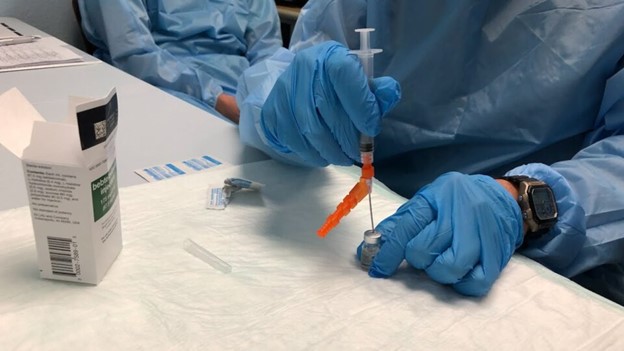
【《We Chinese in America》Media Editor Tang Zhao, November 25, 2022】Per s San Diegans prepare for Thanksgiving gatherings, COVID-19, the flu and other viruses are going to try and grab seat at the table.(Photo credit: County of San Diego Communications Office)
Fortunately, we have ways to protect ourselves and loved ones.
Vaccines are safe and effective against COVID-19 and flu, and the supplies and availability of both remain plentiful.
While it takes about two weeks after vaccination until the body develops sufficient immunity against both vaccinations, there are other steps people can take to lessen their risks.
These include wearing a well-fitting, good-quality mask indoors or in crowded spaces; washing hands thoroughly and often; staying away from sick people; and cleaning commonly touched surfaces.
“This is a wonderful time of year, and we want everyone to celebrate smartly and protect themselves, their family and community,” said Wilma J. Wooten, M.D., M.P.H., County public health officer. “Don’t let flu, COVID-19, or other winter illnesses spoil your family reunions this holiday season.”
COVID-19 and flu vaccines are widely available across the region at pharmacies, medical centers and clinics. The two vaccines can be administered during the same visit. It is important to note that the COVID-19 primary vaccine series or booster does not protect against the flu and the flu vaccine does not protect people against COVID-19. Therefore, it is recommended that eligible San Diegans get vaccinated against both viruses.
COVID-19 Vaccination Progress:
- Close to 2.69 million or 80.4% of San Diegans received the primary series of one of the approved COVID-19 vaccines.
- Boosters administered: 1,500,106 or 60.2 % of 2,492,580 eligible San Diegans.
- More vaccination information can be found at coronavirus-sd.com/vaccine.
COVID-19 Deaths:
- Five additional deaths were reported since the last report on Nov. 17, 2022. The region’s total is 5,562.
- Of the five additional deaths, two were women and three were men. They died between Nov. 5, 2022 and Nov. 14, 2022. Three of the newly reported deaths occurred in the last two weeks.
- Two of the people who died were 80 years or older, one was in their 70s, one was in their 60s and one was in their 50s.
- Four received at least the primary series of the vaccine and one had not.
- All had underlying medical conditions.
COVID-19 Cases, Case Rates and Testing:
- 3,034 COVID-19 cases were reported to the County in the past seven days (Nov. 14 to Nov. 20, 2022). The region’s total is now 938,321.
- The 3,034 cases reported in the past week were higher compared to the 2,193 infections identified the previous week (Nov. 7 to Nov. 13, 2022).
- 5,012 tests were reported to the County on Nov. 19, and the percentage of new positive cases was 6.6 (Data through Nov. 19).
- The 14-day rolling percentage of positive cases, among tests reported through Nov. 19, is 5.3%.
Influenza Activity
The County Health and Human Services Agency now publishes the Respiratory Virus Surveillance Report weekly. The report is published each Thursday (it was published a day early this week due to the Thanksgiving holiday) and tracks key respiratory illness indicators, including flu cases and deaths.
For the week ending Nov. 19, 2022, the report shows the following:
- Three additional flu deaths; the season’s total is now five.
- Of the three additional flu deaths, two were women and one was a man. They died between Nov. 8, 2022 and Nov. 14, 2022.
- One had received a flu shot this season and two had not.
- All had underlying medical conditions and none of the newly-reported deaths were coinfected with COVID-19.
- Emergency department visits for influenza-like illness: 10% of all visits (compared with 10% the previous week).
- Lab-confirmed influenza cases for the week: 2,353 (compared to 2,387 the previous week).
- Total lab-confirmed cases to date: 10,231 (compared to 357 at the same time last season and a 381 prior 5-year average during the same week).
(Source: County of San Diego Communications Office)
This website has a free subscription function, please enter your email address and name (any nickname) in the upper right corner of the page. After subscribing, you can receive timely updates of the website. I hope that new and old readers will actively subscribe, so that we have the opportunity to provide you with better services
Please click: Home (wechineseus.com) for more news and content on this website
Follow The Chinese Media's Twitter account: https://twitter.com/wechineseinus
Follow The Chinese Media's Facebook account: https://www.facebook.com/wechineseinamerica/